Best Kind of Insulation for Attics: 7 Options, Pros & Cons

Written By: First American Roofing

06/24/24

10 Mins
Is your home still drafty in the winter or uncomfortably hot in the summer, despite running your furnace or AC around the clock?
The problem may not be your HVAC system, it could be your attic insulation. In Wisconsin, where we face extreme seasonal temperature swings, proper insulation for attics plays a critical role in keeping homes comfortable and energy-efficient.
But not all insulation is created equal. Some types work better in cold climates, while others are more affordable or easier to install. Choosing the right one can be confusing, especially if your attic has unique design or moisture challenges.
Key Takeaways:
- Why attic insulation is one of the best upgrades for energy savings in Wisconsin.
- The 7 most popular types of insulation explained with pros, cons, and use cases.
- What R-value really means (and why it matters more in colder climates).
- Which insulation works best for different attic layouts and budgets.
- How insulation affects roof life, moisture control, and overall home comfort.

How to Choose the Right Attic Insulation for Your Home
Before diving into the specific insulation types, it’s important to understand what factors actually impact your decision. The right insulation for one home may be completely wrong for another. Especially in a cold-weather state like Wisconsin and Minnesota.
Here’s what to consider:
1. Cold Climate Demands Higher R-Values
Both Wisconsin and Minnesota are in Climate Zone 6, meaning attics need insulation rated between R-49 and R-60 to meet DOE recommendations and local energy codes.
Some materials reach this level more easily (like spray foam), while others require layering or combining types.
2. Attic Layout and Accessibility
Do you have a low-slope attic, lots of obstructions, or vaulted ceilings?
- Spray foam or blown-in insulation is best for tight, hard-to-reach attics or retrofits in older Minnesota homes.
- Batt insulation works well for new builds or open joist bays with easy access.
3. Upfront Budget vs. Long-Term ROI
- Want the most affordable install? Start with fiberglass batts or cellulose blow-in.
- Want long-term energy savings and fewer drafts? Spray foam may cost more up front but pays off in heating savings.
4. DIY vs. Professional Installation
- DIY-friendly: Batt, denim, and radiant barrier insulation.
- Pro required: Spray foam and blown-in cellulose (due to safety equipment or air-sealing complexity).
5. Moisture & Ice Dam Prevention
Cold Midwest winters mean warm indoor air can rise into your attic and condense. Leading to mold, rot, or dangerous ice dams.
Choose insulation that also helps seal out air and moisture, such as:
- Closed-cell spray foam
- Mineral wool
- Or combine batt/blown-in + air sealing

Which Insulation Type Is Right for You?
Now that you’ve seen how the most common attic insulation types compare at a glance, let’s take a closer look at each one. Below, we break down the pros, cons, and ideal use cases for the seven most popular insulation materials used in homes throughout Wisconsin and Minnesota.
Whether you’re planning a DIY project or hiring a professional, understanding the strengths and limitations of each type will help you make the most cost-effective, energy-efficient choice for your attic.
1. Batt Insulation
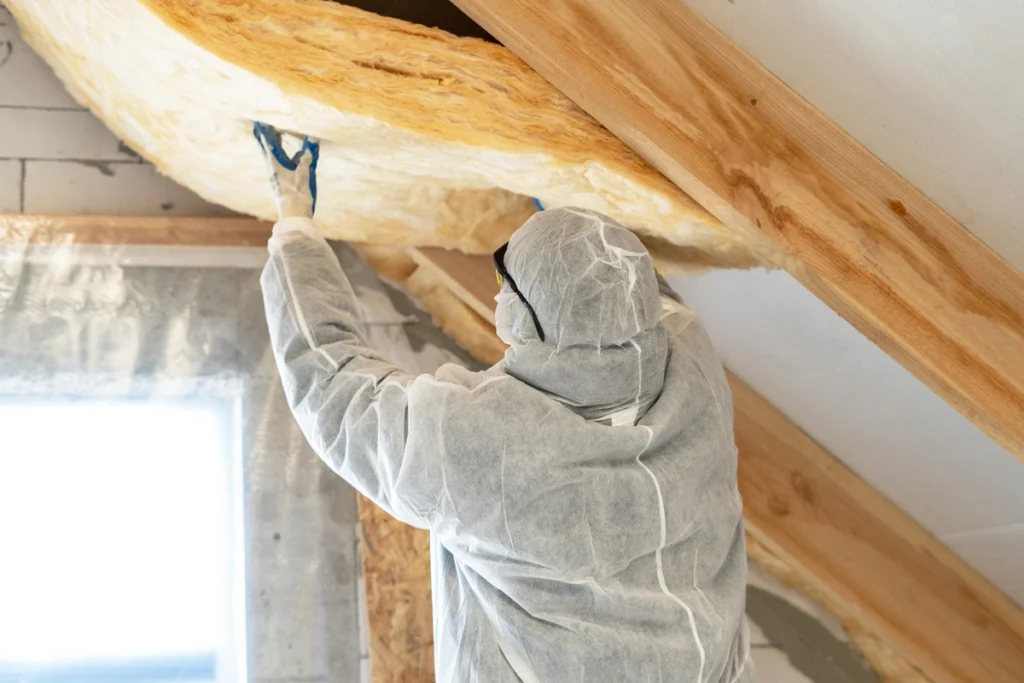
Batt insulation is one of the most common types of insulation. It comes in large rolls or sheets, typically made from fiberglass, although mineral wool and cotton are also used. This insulation is manufactured by weaving fine glass or mineral fibers together to form a thick, fluffy material. Installation involves cutting the batts to fit snugly between the joists or studs in the attic space.
Pros
- Ease of Installation: Batt insulation is relatively easy to install, even for DIY enthusiasts.
- Cost-Effective: This type is generally more affordable than other forms of insulation.
- Availability: Widely available at most home improvement stores.
- Fire-Resistant: Fiberglass batts are non-combustible, offering an extra layer of fire safety.
Cons
- Moisture Problems: Susceptible to moisture retention, which can lead to mold growth.
- Gaps and Voids: Poor installation can leave gaps, reducing its effectiveness.
- Skin Irritation: Fiberglass can cause skin and respiratory irritation during installation.
- Lower R-Value: Compared to other insulation types, batt insulation has a lower R-value per inch.
2. Blown-In Insulation
Blown-in insulation, also known as loose-fill insulation, is made from small particles of fiberglass, cellulose, or mineral wool. It is installed using a blowing machine, which sprays the particles into the attic space to fill gaps and cover surfaces evenly.
Pros
- Comprehensive Coverage: Fills gaps and cavities more effectively than batt insulation.
- Sound Insulation: Excellent for reducing noise transmission through walls and ceilings.
- Quick Installation: Professionals can install blown-in insulation quickly and efficiently.
- Recycled Materials: Cellulose blown-in insulation is often made from recycled paper products.
Cons
- Settling: Over time, blown-in insulation can settle, reducing its R-value.
- Moisture Absorption: Particularly with cellulose, moisture can be absorbed, leading to mold and mildew.
- Professional Installation Needed: Requires specialized equipment and expertise to install correctly.
- Dust and Debris: The installation process can be messy and create dust.
3. Spray Foam Insulation
Spray foam insulation is a two-part liquid that expands into a foam, creating a solid, insulating layer upon curing. It can be applied directly to the surfaces of the attic, filling every gap and crevice.
Pros
- High R-Value: Provides a higher R-value per inch than most other insulation types.
- Air Barrier: Acts as both an insulator and an air barrier, sealing leaks and gaps.
- Moisture Resistance: Closed-cell foam offers excellent resistance to moisture.
- Structural Support: Adds rigidity and strength to the structure where applied.
Cons
- Cost: One of the more expensive insulation options.
- Professional Installation Required: Needs to be installed by trained professionals due to chemical handling.
- Off-Gassing: Can emit gases during and after installation, requiring adequate ventilation.
- Difficult to Remove: Once installed, it is challenging to remove or replace.
4. Rigid Foam Insulation
Rigid foam insulation comes in panels or boards made from polystyrene, polyisocyanurate, or polyurethane. These boards are cut to fit and installed against the attic’s structural components.
Pros
- High R-Value: Provides an excellent R-value per inch, making it highly efficient.
- Moisture Resistance: Resists moisture absorption, reducing the risk of mold.
- Durable: Long-lasting and resistant to compression and damage.
- Easy Installation: Panels can be easily cut and fitted into place.
Cons
- Cost: More expensive than traditional batt insulation.
- Flammability: Requires a layer of fire-resistant material for safety.
- Rigid: Not suitable for irregular spaces or areas with many obstructions.
- Environmental Impact: Manufacturing processes can be less environmentally friendly.
5. Reflective or Radiant Barrier Insulation
Reflective or radiant barrier insulation consists of a reflective film, usually aluminum, attached to a substrate like kraft paper or plastic film. It is installed in attics, primarily to reduce heat gain.
Pros
- Effective in Hot Climates: Reduces heat gain, making it ideal for warmer climates.
- Lightweight: Easy to handle and install.
- Energy Efficient: Lowers cooling costs by reflecting radiant heat away from the attic.
- Non-Toxic: Safe to handle and does not emit harmful chemicals.
Cons
- Limited Use: Less effective in cooler climates where heating is a primary concern.
- Dust Accumulation: Effectiveness can be reduced if the reflective surface gets dirty.
- Requires Air Gap: Needs an air gap to function correctly, complicating installation.
- Does Not Insulate: Does not provide thermal insulation, only radiant heat reflection.
6. Cotton (Denim) Insulation
Cotton insulation, often made from recycled denim, is an eco-friendly option for attic insulation. It is manufactured by shredding and treating denim fibers, which are then formed into batts.
Pros
- Eco-Friendly: Made from recycled materials, reducing environmental impact.
- Non-Irritating: Safe to handle without causing skin irritation.
- Sound Absorption: Provides good sound insulation properties.
- Fire-Resistant: Treated with borate for fire resistance and pest control.
Cons
- Cost: More expensive than traditional fiberglass batt insulation.
- Availability: Not as widely available as other insulation materials.
- Moisture Absorption: Can absorb moisture, leading to potential mold issues.
- Lower R-Value: Generally has a lower R-value compared to other insulation types.
7. Mineral Wool Insulation
Mineral wool insulation, also known as rock wool or slag wool, is made from molten rock or industrial waste. It is spun into fibers and formed into batts or loose-fill insulation.
Pros
- Fire-Resistant: Non-combustible and can withstand high temperatures.
- Soundproofing: Excellent sound insulation properties.
- Water-Resistant: Does not absorb water, reducing the risk of mold growth.
- High R-Value: Provides good thermal insulation.
Cons
- Cost: More expensive than fiberglass insulation.
- Installation: Heavier and more challenging to install.
- Availability: Not as readily available as other types of insulation.
- Dust: Can produce dust during installation, requiring protective gear.
Attic Insulation Comparison Table
| Insulation Type | R-Value (Per Inch) | Cost | DIY-Friendly | Moisture Resistance | Best For |
|---|---|---|---|---|---|
| Batt (Fiberglass) | 2.9 – 3.8 | Low | Yes | No | Budget-friendly projects in open, accessible attics |
| Blown-In (Cellulose) | 3.2 – 3.8 | Moderate | With machine | Limited (absorbs moisture) | Filling irregular cavities in older MN/WI homes |
| Spray Foam (Closed-Cell) | 6.0 – 7.0 | High | No – professional install required | Yes | Maximum energy savings, sealing air leaks, ice dam prevention |
| Rigid Foam Board | 5.0 – 6.5 | High | Yes – with cutting tools | Yes | Vaulted ceilings, attic remodels, or structural upgrades |
| Radiant Barrier | N/A (Reflects heat) | Low | Yes | No | Supplemental use in hot attics (not ideal as standalone insulation in cold climates) |
| Cotton (Denim) | 3.5 – 4.0 | Moderate to High | Yes – very safe for DIY | No | Eco-conscious DIYers looking for safe, sustainable materials |
| Mineral Wool | 3.7 – 4.2 | Moderate | Heavier to install | Yes | Fire resistance and mold prevention in humid, cold climates |
Get the Proper Insulation for Your Home
Choosing the right attic insulation isn’t just about materials. It’s about making your home warmer in the winter, cooler in the summer, and more energy-efficient year-round. Whether you’re battling high heating bills, moisture problems, or just trying to meet building code, there’s a solution that fits your needs and budget.
From affordable fiberglass batts to high-efficiency spray foam, the right choice depends on your home’s layout, goals, and the unique challenges of living in Wisconsin or Minnesota’s cold climate.
If you’re unsure where to start, don’t worry we’ve got your back. First American Roofing & Siding has helped hundreds of local homeowners insulate their attics the right way, saving energy and avoiding costly problems like ice dams and mold. Schedule your free attic insulation consultation today! Let our experts evaluate your attic and recommend the best solution for long-term comfort and efficiency.
Frequently Asked Questions
Should I Remove Old Attic Insulation Before Adding New?
Removing old attic insulation isn’t always necessary unless it’s damaged, moldy, or contains pests. If it’s in good condition, you can add new insulation on top. However, removal may improve energy efficiency and air quality. Consult a professional to assess your attic’s specific needs before proceeding.
Can I Put Too Much Insulation In My Attic?
Yes, too much insulation can reduce ventilation, cause moisture buildup, and lead to mold or structural damage. It may also compress existing insulation, reducing its effectiveness. Aim for the recommended R-value for your climate zone to balance efficiency and ventilation. Always consult a professional for guidance.
How Often Should Attic Insulation Be Replaced?
Attic insulation should be replaced every 15–20 years or sooner if it’s damaged, moldy, or infested by pests. Regular inspections can help identify issues like moisture or compression. Upgrading insulation when it underperforms improves energy efficiency and home comfort. Consult a professional for an accurate assessment.
Is It Okay To Cover Attic Insulation With Plywood?
Yes, you can cover attic insulation with plywood, but ensure it doesn’t compress the insulation, as this reduces effectiveness. Maintain proper ventilation and avoid blocking vents. Use spacers or elevated flooring systems to preserve insulation depth while creating storage space. Always prioritize safety and energy efficiency.